Sennheiser Momentum 4 Wireless Review: Sacrificing Style for Stamina
Three years ago, Sennheiser did something that pissed off a lot of audio purists. They retired the retro, industrial steel-and-leather aesthetic of the Momentum 3 Wireless and replaced it with a rounded, plastic chassis that looks indistinguishable from a Sony WH-1000XM5 or a generic airport-kiosk headphone.
When the Sennheiser Momentum 4 Wireless first landed on my test bench, my initial reaction was skepticism. Audio companies often streamline their physical hardware right before they start stripping down their acoustics to protect profit margins. But after tracking these headphones through years of firmware updates, daily commutes, and long-haul flights, I was happy to be wrong about the sound.
Sennheiser traded away visual personality, but what they bought with that plastic chassis is a comfortable, practical over-ear headphone that quietly embarrasses the competition on battery endurance and pure tonal balance. At its original launch price of $349.95, it was a solid alternative to Sony and Bose. Now, sitting on Amazon and other retailers hovering around the $200–$250 mark depending on sales cycles, it is arguably the smartest deal in the premium noise-canceling bracket.
Design and Comfort: Trading Style for Stamina
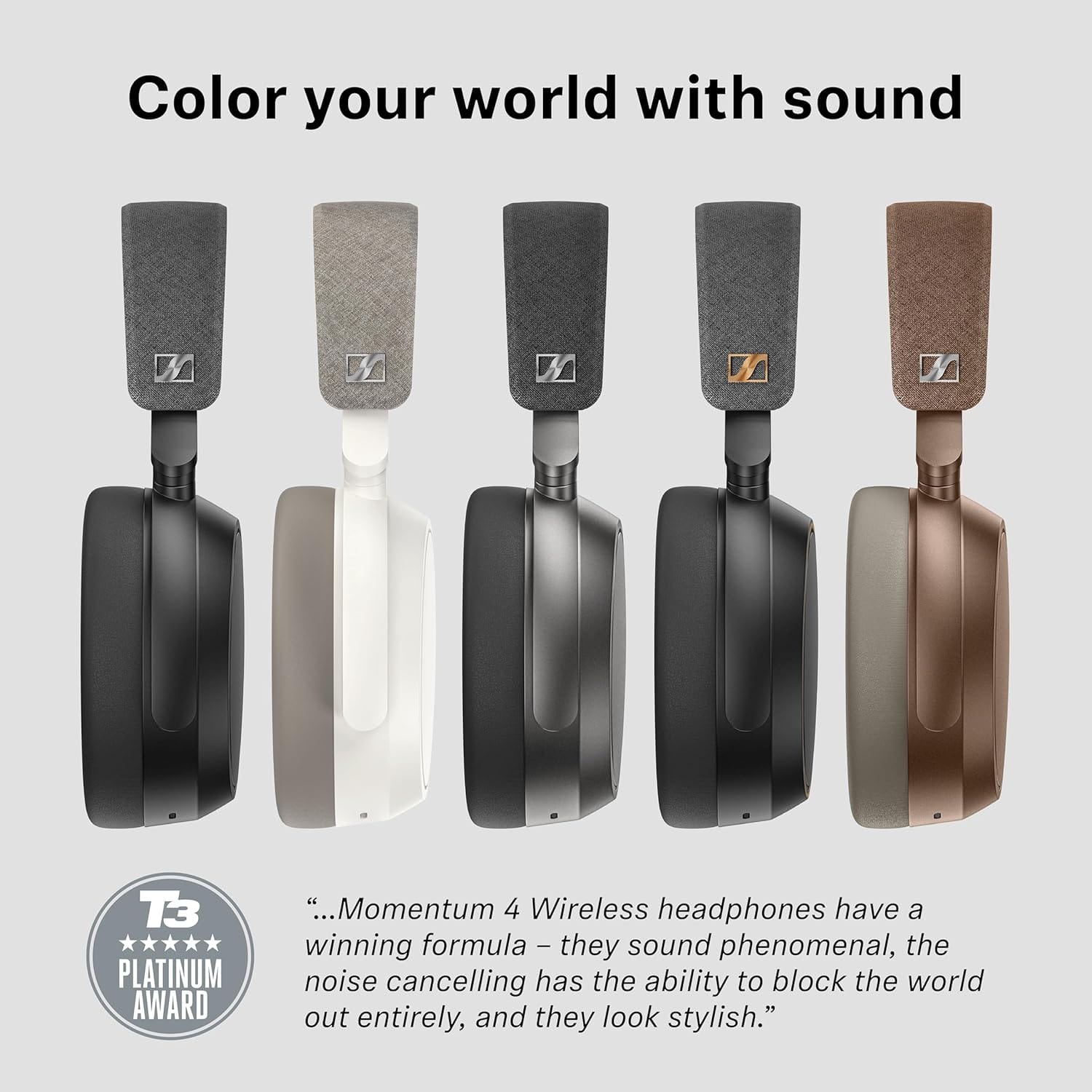
Let's address the elephant in the room: these headphones are visually boring. If you owned the Momentum 2 or 3, you remember the exposed stainless steel sliders and sheepskin leather. The Momentum 4 looks like a bar of hotel soap. The only nod to Sennheiser’s design heritage is a textured woven fabric section across the top of the headband.
However, nostalgia weighs a lot on the crown of your head. According to Sennheiser's official specifications, moving to rigid polycarbonate plastic dropped the weight down to roughly 293 grams (compared to the Momentum 3's chunky 320 grams). More importantly, the ear cups were widened. If you have larger ears, they won't rub against the driver grilles—a persistent annoyance on older Sennheiser designs and the current Bowers & Wilkins PX7 S2.
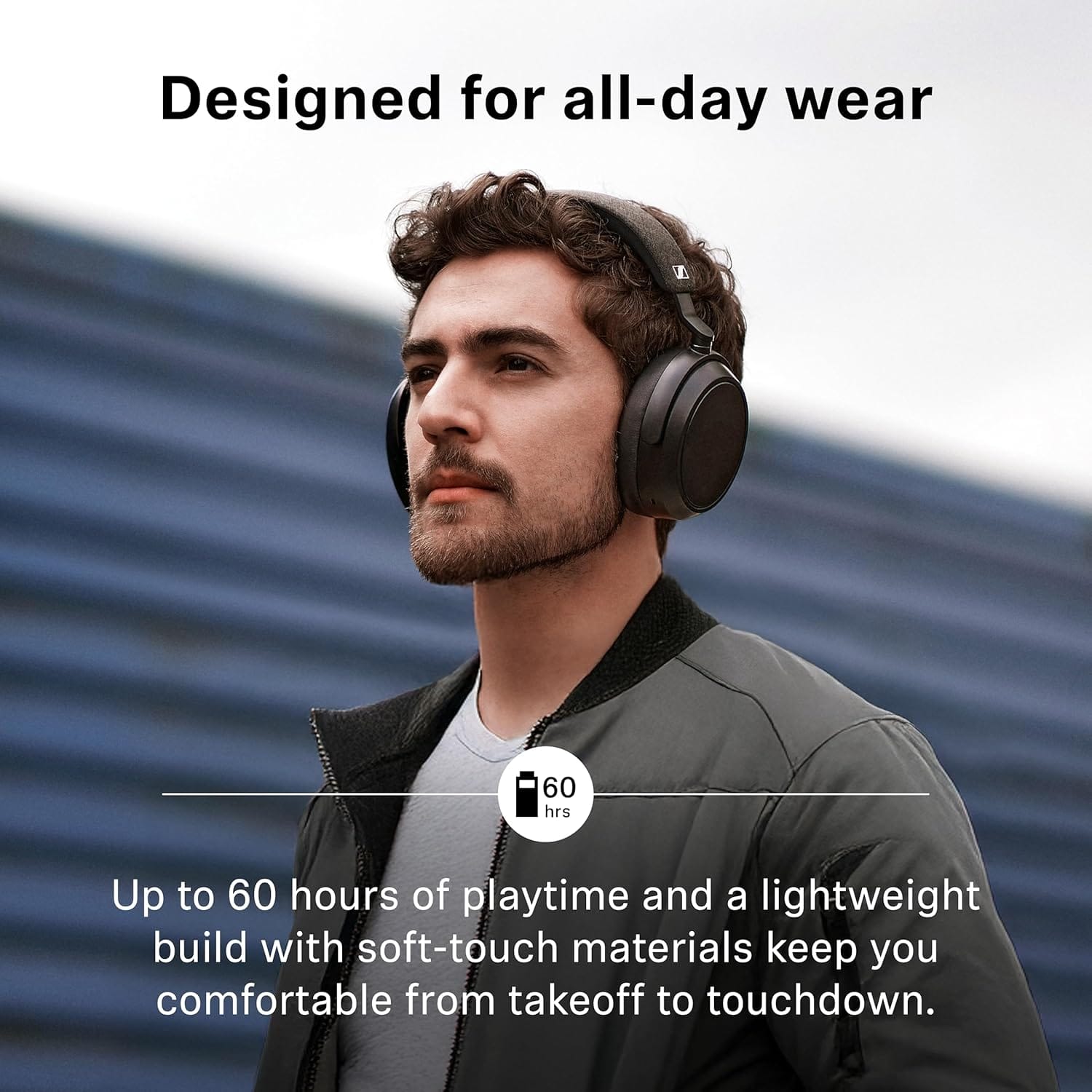
The synthetic leather pads are deep, soft, and distribute clamping force evenly. I wore these through an eight-hour flight from Seattle to Tokyo without developing the dreaded "hot ear" pressure point on the top of my skull.
The physical folding hinges are gone, meaning the headphones fold flat rather than collapsing into a tight ball. They sit inside a reinforced hardshell zip case alongside a USB-C charging cable, a 2.5mm to 3.5mm analog cable, and a two-prong flight adapter. It takes up slightly more backpack footprint than collapsible models, but the hinge design is simpler and less prone to mechanical fatigue over a four- or five-year lifespan.
Battery Life: A Number That Actually Holds Up
In tech journalism, manufacturer battery claims are usually fiction written by marketing departments under highly precise, artificial laboratory conditions (usually 50% volume playing a single acoustic track with noise canceling turned off).
Sennheiser claims 60 hours of continuous playback with Active Noise Cancellation (ANC) turned on.
When independent testing labs like RTINGS put the Momentum 4 on their test rigs, the headphones actually cleared 62 hours at standard listening volumes. In my own day-to-day testing, I charged the Momentum 4 on the first of the month, used them for two to three hours every weekday during work sessions and commuting, and didn't see the low-battery voice prompt until week four.
To put that endurance into perspective: you can drain a pair of Bose QuietComfort Ultras twice over and a pair of Sony WH-1000XM5s entirely, and the Momentum 4 will still have roughly 20% juice left in the tank. If you are someone who regularly forgets to plug your gear in on Sunday night, this hardware choice alone justifies the purchase.
When you do manage to run the 700 mAh internal lithium-ion battery dry, a quick 5-minute charge over USB-C yields roughly 4 hours of playback. Note that the headphones can also pass digital audio directly over that USB-C cable while charging from a laptop—a feature consumer headphones routinely strip out to save pennies on internal DAC/AMP implementation.
Sound Quality: The Real Reason You Buy Sennheiser
Consumer Bluetooth headphones usually fall into two tuning traps: they either pump the mid-bass so hard that male vocals sound like they're coming out of a muddy subwoofer, or they aggressively spike the treble to create a fake, fatiguing sense of "detail."
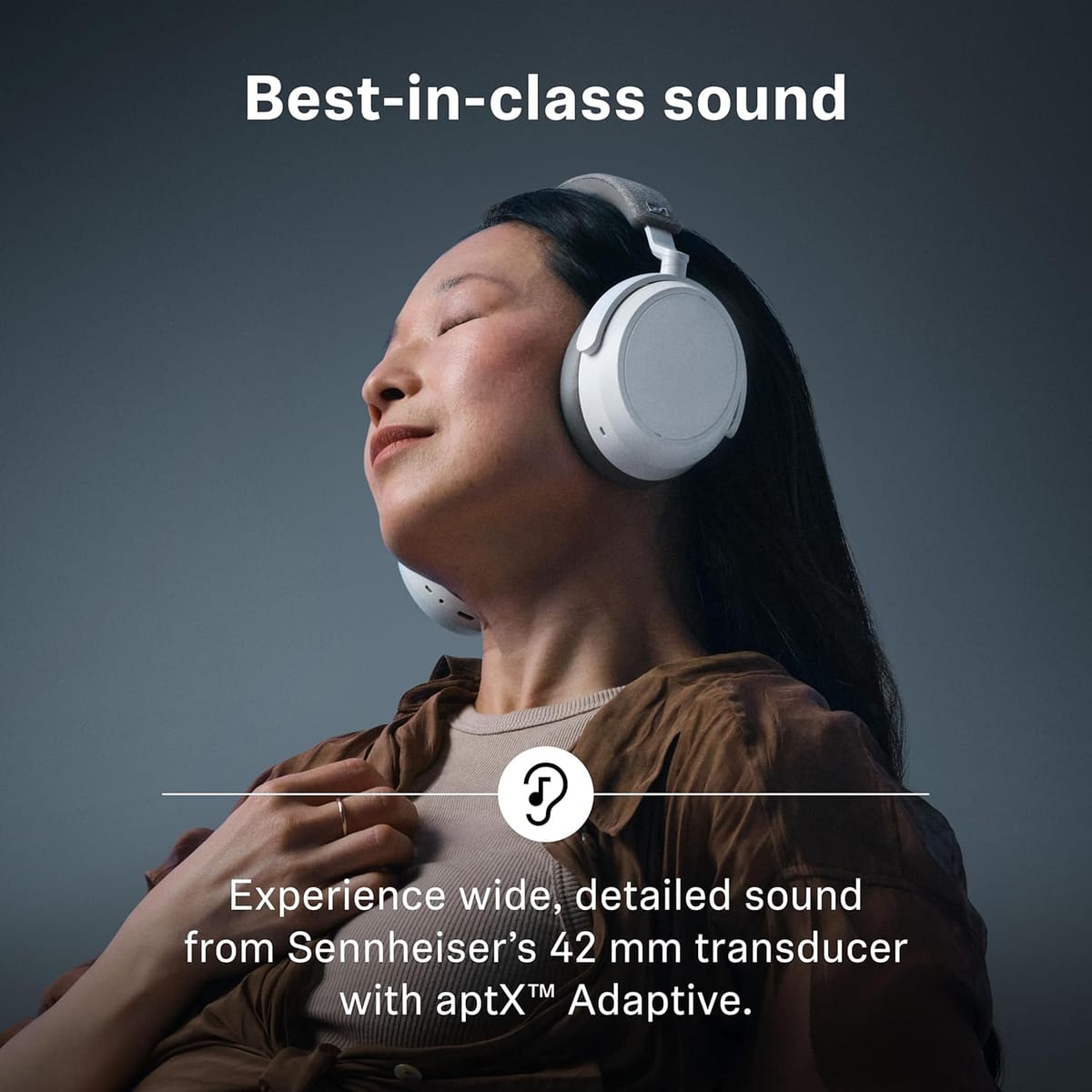
The Momentum 4 is built around Sennheiser's 42mm dynamic transducers. Out of the box, it carries an enjoyable, soft V-shape tuning that leans slightly warm, but it remains remarkably disciplined. The sub-bass extends deep into the 20Hz range with genuine rumble, but Sennheiser pulled back the mid-bass bulge that plagued the Momentum 3. As noted in detailed measurements by audio engineers at Headphones.com, the bass elevation sits tastefully above the neutral target curve without bleeding over the lower midrange.
When you listen to complex acoustic tracks—like Fleetwood Mac’s "The Chain" or Radiohead’s "National Anthem"—bass guitar lines stay distinct from bass drum kicks. Acoustic guitars retain their metallic pluck, and vocals sit naturally in the center of the soundstage rather than getting pushed behind a wall of synthetic warmth.
If you dislike the stock tuning, the companion Sennheiser Smart Control app (iOS/Android) offers a responsive 5-band equalizer, alongside a feature called "Sound Personalization." Built in collaboration with the Fraunhofer Institute for Digital Media Technology, the personalization wizard plays rhythmic stems and asks you to drag sliders until instruments sound natural to your ear. It works surprisingly well, generating a custom DSP profile stored directly on the headphones' onboard memory.
Codec support is practical for Android and PC users: alongside mandatory SBC and AAC, you get aptX and aptX Adaptive. If your smartphone or USB transmitter supports aptX Adaptive, the headphone dynamically scales bitrates up for high-resolution Tidal or Qobuz streams, and drops latency down when you open a mobile game or video file so the audio doesn't lag half a second behind the actors' lips.
Active Noise Cancellation and Transparency: Good, Not Supreme
Let’s be direct: if your sole, overriding purchasing criteria is isolating yourself inside a silent sensory deprivation tank while sitting next to a screaming infant on a Boeing 737, buy Bose or Sony.
Sennheiser uses a hybrid adaptive ANC setup utilizing four microphones. It handles constant, low-frequency drones—HVAC units, tire roar on asphalt, jet engines—very competently. Once music is playing at 40% volume, background hum disappears entirely.
Where the Momentum 4 falls a step behind the Sony WH-1000XM5 and the Bose QuietComfort Ultra is in handling sudden, mid-to-high frequency transient noise. Clattering coffee shop dishes, someone mechanical-keyboards typing in the cubicle next to you, or a sharp siren outside your window will leak through the isolation barrier more distinctly than they do on class-leading Bose algorithms.
The Transparency Mode (which pipes external ambient sound into your ears so you can hear traffic or have a conversation without removing the headset) is a solid B-grade effort. It sounds clean and lacks the harsh, metallic hiss that cheaper headphones introduce, but your own voice will sound slightly muffled in your head compared to the natural, open-air transparency benchmark set by Apple's AirPods Max.
Controls, Quirks, and Daily Friction
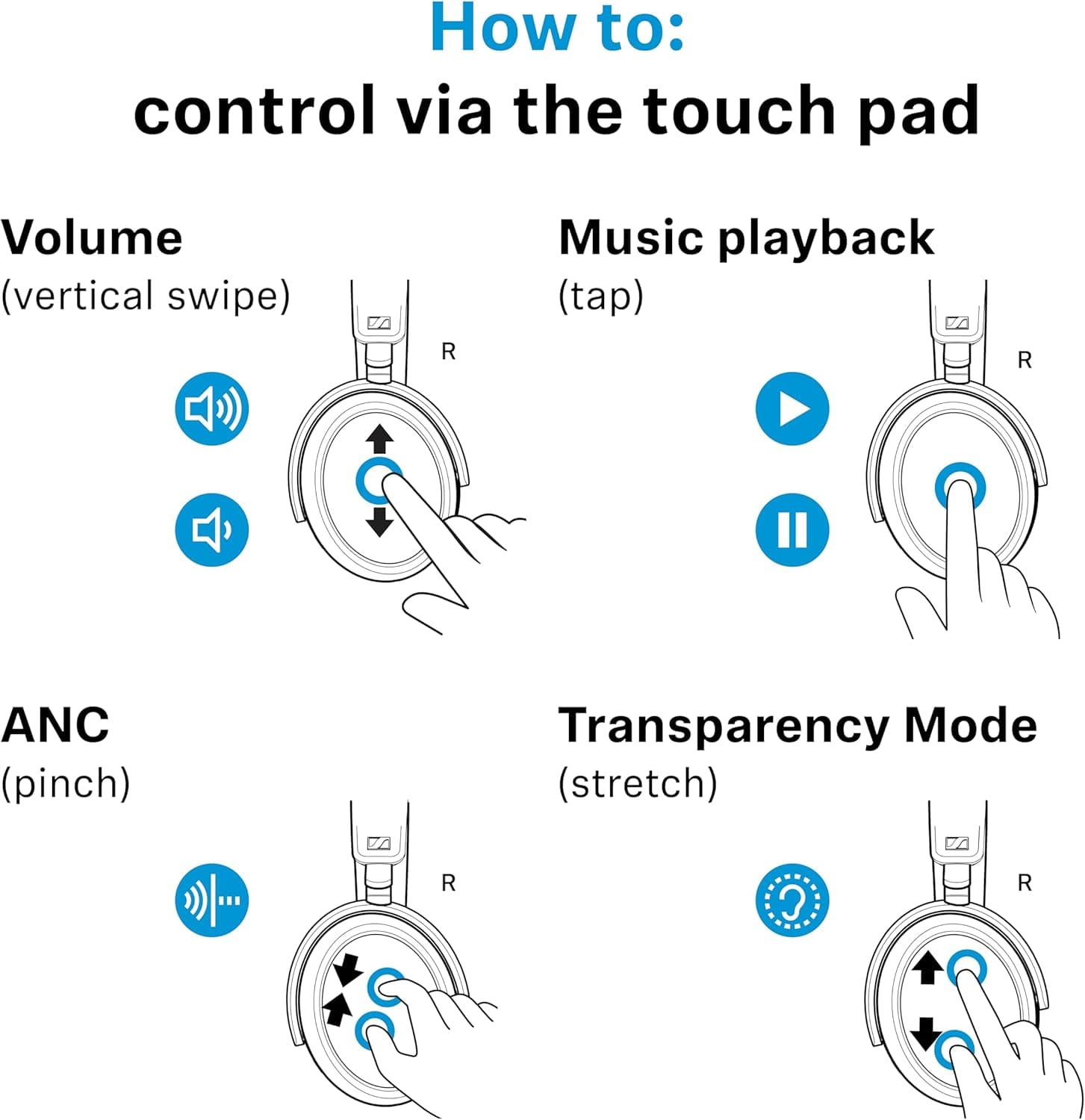
Sennheiser abandoned physical buttons for a capacitive touch panel on the right ear cup. Swipe forward/back for track skipping, swipe up/down for volume adjustments, and pinch-to-zoom to continuously blend between Active Noise Cancellation and Transparency Mode.
In standard indoor conditions, the touch interface is responsive and accurate. However, capacitive panels have an inherent physics problem: moisture. If you get caught in a light drizzle or wear these during a humid walk, water droplets can occasionally trigger false inputs. Sennheiser added an option in the app to disable touch controls entirely if you find yourself stuck in the rain, relying instead on auto-pause smart wear sensors inside the cups.
Speaking of smart wear sensors: early production runs of the Momentum 4 in late 2022 suffered from buggy firmware where the headphones would refuse to sleep when placed inside their case, waking up randomly and connecting to phones from inside a backpack. Sennheiser spent several months releasing iterative firmware patches. As of the current firmware builds, the auto-on/off behavior is stable. Pick them up, they turn on and pair in two seconds; lay them flat on a desk for 15 minutes, they enter deep sleep.
The Verdict: Value Over Vanity
There is an old saying in audio hardware design: You can pay for the engineering, or you can pay for the marketing, but you rarely get both at a discount.
The Sennheiser Momentum 4 Wireless is an engineering-led product dressed in a boring suit. It sacrifices the luxury leather and heavy metal sliders of its ancestors to hit a weight class that doesn't hurt your neck. It doesn't beat Bose on pure noise cancellation prowess, and its capacitive touch controls won't win any awards in a rainstorm.
What it delivers is 60 actual hours of battery life, reliable aptX wireless codecs, and a balanced, high-fidelity acoustic presentation that makes its direct competitors sound congested by comparison.
If you are paying full MSRP ($349), it fights a hard, competitive battle against the broader market. But because this hardware has been out for a while, it regularly drops to $220–$250 during seasonal sales. At that price bracket, the Momentum 4 stops being just a good pair of headphones and becomes one of the most pragmatic, high-value deals in consumer audio.
The Breakdown
- Buy them if: You care deeply about clean, balanced instrument separation, you want battery life that lasts an entire month of standard office commuting, or you frequently switch between USB-C wired audio and Bluetooth.
- Skip them if: You need absolute, top-tier noise suppression for frequent air travel (look to Bose), or you demand tactile, physical buttons that work flawlessly with heavy gloves in winter weather.