Bafang G020 Hub Motor Review: A Dependable Commuter Workhorse That Won't Empty Your Wallet
The electric bike market is currently saturated with manufacturers pushing massive 1000W mid-drive motors and fat-tire platforms designed for aggressive off-road use. If you read the marketing copy, you would think every rider spends their weekends scaling mountain peaks. The reality of consumer electronics, and micromobility in particular, is much more mundane. Most riders are commuting on pavement, running errands, or taking casual weekend rides on paved trails. For these tasks, a massive mid-drive system is often an expensive over-prescription.
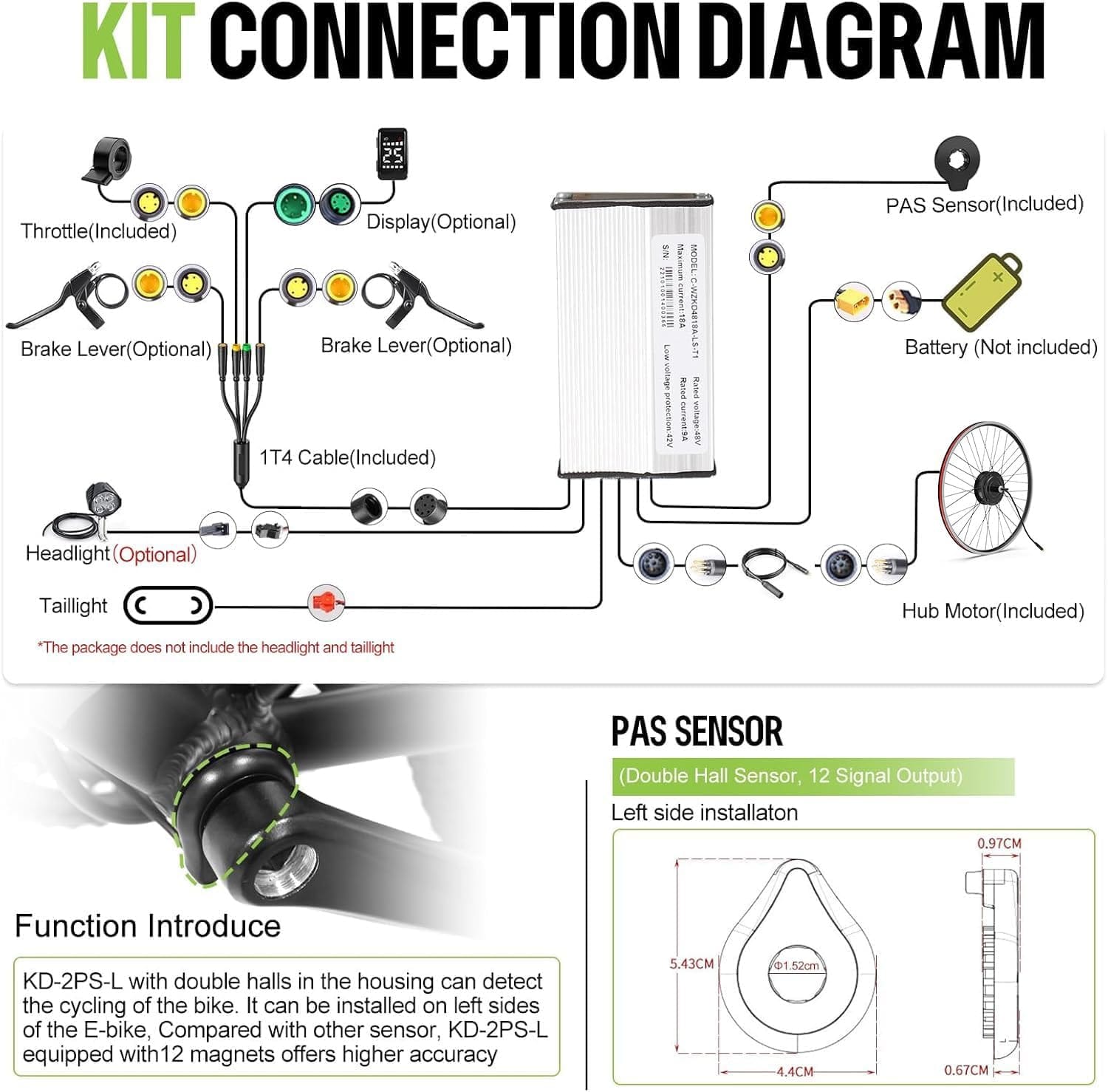
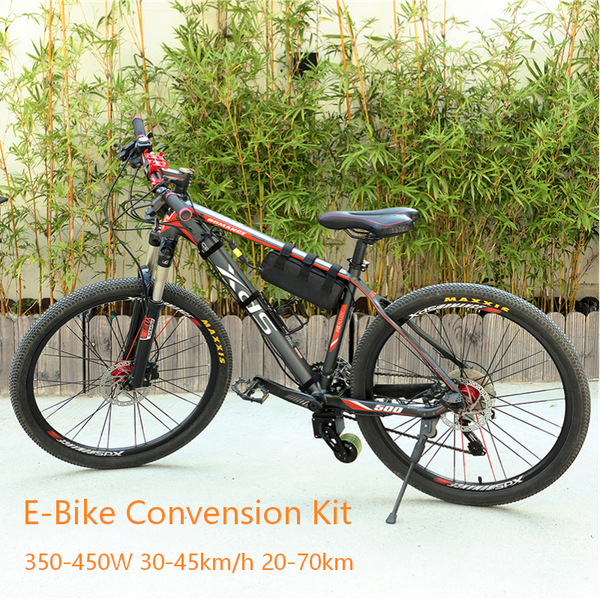
This is where the geared hub motor continues to dominate the practical market, and Bafang has effectively held a monopoly on reliable, budget-friendly hub motors for a decade. The Bafang G020 (available in both Front Motor [FM] and Rear Motor [RM] configurations) is perhaps the most representative example of this category. It is standard equipment on dozens of mid-tier ebike brands and serves as a highly popular foundation for aftermarket conversion kits.
Having reviewed electric bicycle hardware for over a decade, I evaluate components based on cost-to-performance ratio and long-term durability. The G020 operates like a municipal bus: rarely flashy, entirely predictable, and highly effective at getting you to your destination. Here is a realistic look at what this motor does well, where its limits lie, and whether it is worth your money.
Hardware and Specifications
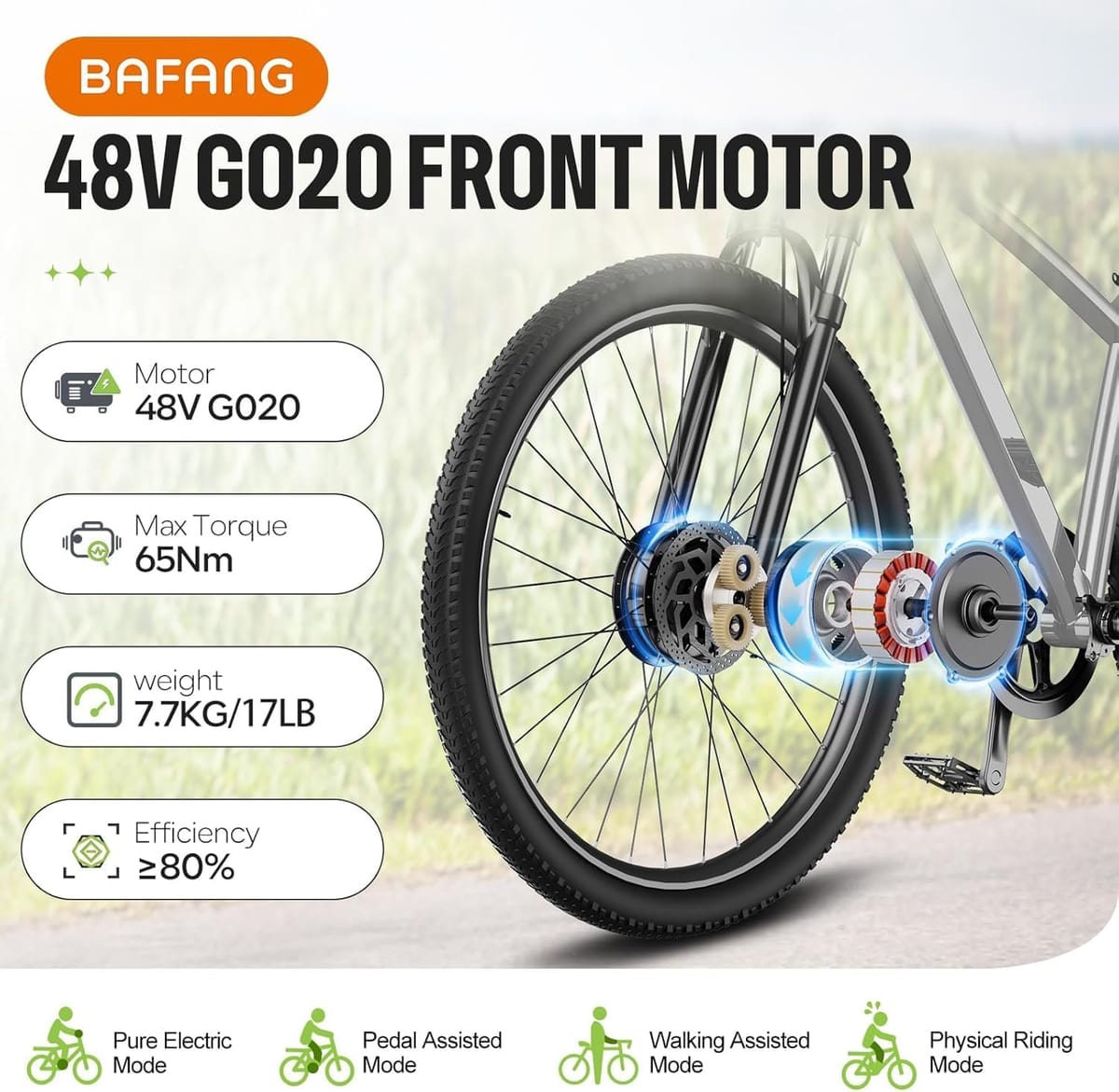
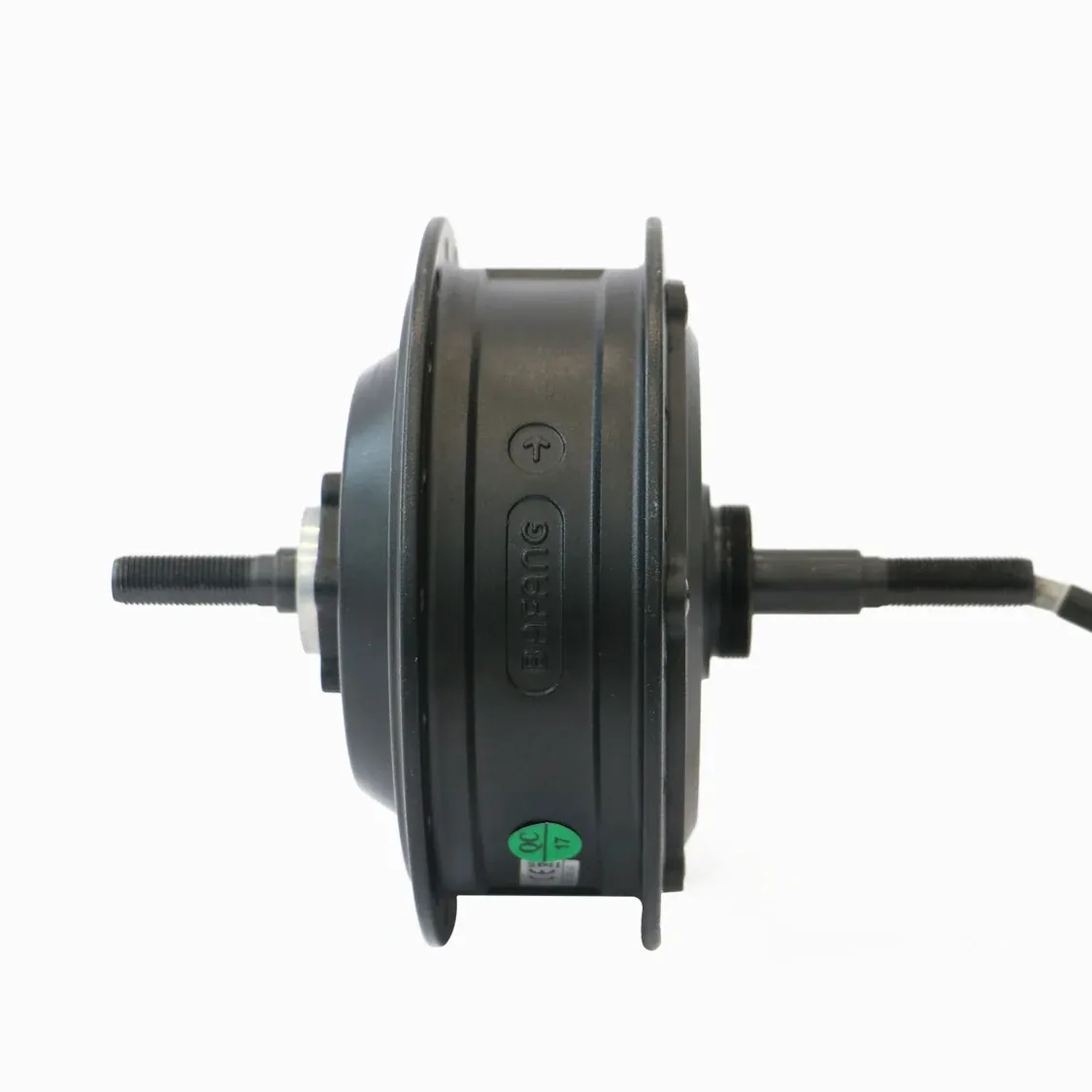
The G020 series is an evolution of Bafang’s older 8Fun branded motors, refined to offer better water resistance and standardized connectors. It is a brushless, geared hub motor. Unlike direct-drive hub motors which are heavy and create magnetic drag when you pedal without power, the G020 utilizes an internal planetary gear set with a one-way clutch.
This motor is primarily manufactured in three output tiers: 250W, 350W, and 500W. The physical casing remains largely identical across these variants, with a weight hovering right around 3.3 kilograms (7.2 pounds).
Varstrom
The standard mounting parameters are exactly what you want for a modern commuter bike. The rear motor (RM G020) generally features a standard 135mm or 138mm drop-out width, meaning it will fit into the vast majority of standard bicycle frames. It uses a standard 36-hole spoke configuration and is compatible with standard 6-bolt disc brake rotors.
Crucially, the modern iterations of the RM G020 utilize a standard Shimano HG (Hyperglide) freehub body. Older budget hub motors often forced you to use obsolete thread-on freewheels, which severely limited your gearing choices. The HG body allows you to slide on a standard 7, 8, 9, or 10-speed cassette from Shimano, SRAM, or Microshift. It connects to the bike's controller via a standard, weather-resistant 9-pin connector.
Real-World Performance
Specifications on a spec sheet only tell part of the story. In practice, the performance of the Bafang G020 depends heavily on the controller it is paired with and the voltage of your battery.
I highly recommend looking for the 48V, 500W variant of this motor. At 48 volts, the 500W motor produces a stated 65 Newton-meters (Nm) of torque. In the context of ebike performance, 65 Nm is the baseline for a comfortable ride in a moderately hilly city.
Varstrom
When accelerating from a dead stop on flat ground, the 500W G020 pulls smoothly and predictably. It does not jerk or threaten to loop the bike out from under you. If you rely on a thumb throttle, the acceleration feels linear. When tackling hills, you need to manage your expectations. A 65 Nm hub motor will easily pull a 180-pound rider up a 5-to-8 percent grade with minimal pedaling effort. However, if you point this motor at a sustained 15-percent grade, it will bog down rapidly. You will need to drop into a low mechanical gear and provide significant pedal input to prevent the motor from stalling and overheating.
The 250W and 350W variants, which top out around 45 Nm of torque, are strictly for flat terrain or riders who only want a gentle tailwind effect while doing most of the pedaling work themselves. If you live in Seattle or San Francisco, the lower-wattage G020s will leave you disappointed.
Because it is a geared hub motor, the internal one-way clutch allows the motor to freewheel. If your battery dies, or if you prefer to ride with the motor turned off, the G020 produces zero magnetic drag. The bike will simply feel like a normal bicycle carrying an extra seven pounds in the rear wheel. The planetary gears do produce a soft, high-pitched whirring noise under heavy load, but it is well within acceptable limits and easily drowned out by wind noise at 15 mph.
Durability and Maintenance
"The hub motor market is largely solved physics at this point; the differentiator is reliability and replacement part availability," an industry supply chain analyst noted at a recent trade event. Bafang excels precisely because it is a known quantity.
The internal planetary gears inside the G020 are made of nylon, not steel. This is an intentional design choice by Bafang. Nylon gears are significantly quieter than metal gears and require less heavy lubrication. More importantly, they act as a mechanical fail-safe. If you severely abuse the motor by aggressively applying the throttle on a steep hill while in too high of a gear, the nylon gears will strip before the more expensive copper stators or magnets overheat and melt.
Replacing a stripped nylon gear cluster in a Bafang G020 takes about 45 minutes, requires basic hand tools, and a replacement gear set costs roughly $30 online.
The casing is rated IPX5 for water resistance. This means it can handle sustained rain and splashing from puddles, but you should never submerge the axle in water, nor should you point a high-pressure power washer directly at the motor seals. Water ingress through the axle bearings remains the number one cause of premature failure in these units, usually manifesting as a rusted internal stator. A simple application of marine grease around the axle entry points during your annual tune-up goes a long way.
Front vs. Rear Configurations
Bafang manufactures the G020 in a Front Motor (FM) configuration with a 100mm drop-out width, and a Rear Motor (RM) configuration.
Varstrom
If you are buying a conversion kit to electrify a standard acoustic bicycle, I strongly advise purchasing the rear motor version. While front hub motors are easier to install because you don't have to deal with the chain and derailleur, they negatively impact handling. Adding 7.2 pounds of unsprung mass to your steering axis makes the front end feel sluggish. Furthermore, front bicycle forks (especially carbon fiber or lightweight aluminum forks) are not engineered to handle the rotational torque generated by a 500W motor pulling the bike forward.
The rear frame triangle is inherently stronger, and keeping the weight in the rear wheel maintains a more natural center of gravity. The RM G020 provides superior traction, especially on wet pavement or loose gravel, because the rider's body weight sits over the drive wheel.
Pricing and Value Analysis
When evaluating the price of the G020, you have to separate wholesale component costs from retail replacement costs.
On wholesale platforms, a bare G020 motor costs well under $100. However, consumers are either buying these as part of a complete conversion kit (which includes the controller, wiring harness, display, and throttle) or as a direct replacement part from an ebike brand.
If you purchase a direct replacement motor from a North American brand—for example, Biktrix sells the 48V 500W G020 as a replacement part—you can expect to pay around $350. This premium accounts for US-based warehousing, customer support, and guaranteed compatibility with their specific bikes (like the Swift Step-Thru).
If you are mechanically inclined, you can source G020 conversion kits directly from eBay or authorized distributors for approximately $200 to $260. These kits usually include the motor laced into a rim, a basic 18A to 22A controller, and a display.
The value proposition here is exceptionally strong. For under $300, you can acquire a highly reliable drive system that will realistically last 5,000 to 10,000 miles before requiring anything more than a basic regreasing or a $30 gear replacement. Compared to mid-drive kits like the Bafang BBS02, which cost upwards of $450 and require much more intensive maintenance of your bicycle's drivetrain, the G020 is a bargain for the pragmatic rider.
The Consensus
The Bafang G020 does not offer the raw power required for aggressive mountain biking, nor does it have the sophisticated torque-sensing telemetry found in premium Bosch or Brose systems.
What it offers is predictable reliability. It uses standard connectors, standard freehub bodies, and easily sourced replacement parts. If you are building a commuter ebike to handle a 10-mile daily round trip, or if you need to replace a burnt-out generic hub motor on a budget ebike, the 48V 500W Bafang RM G020 is precisely the hardware you should buy. It delivers exactly what you pay for, with no unnecessary complications.