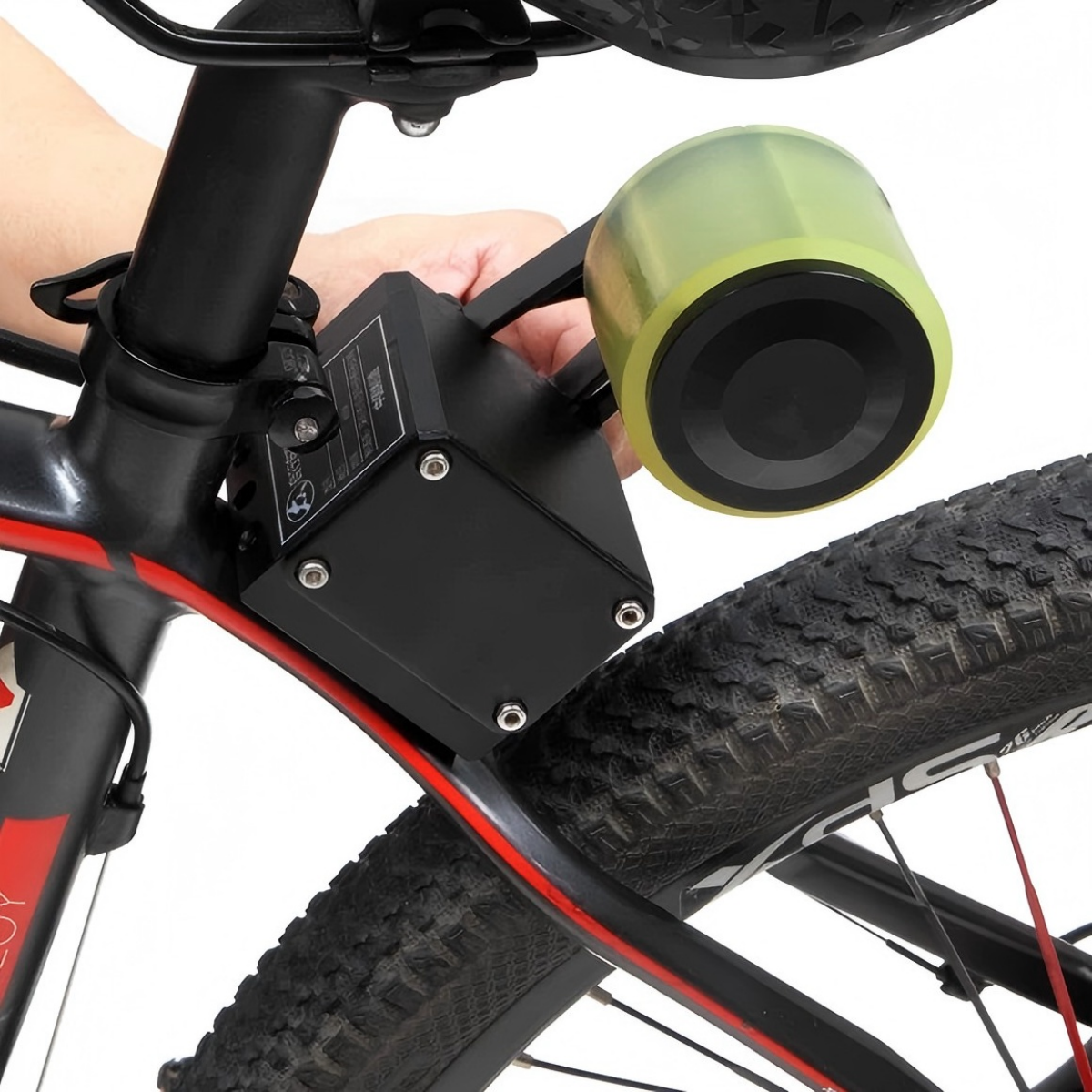
350W Rear Wheel Drive Electric Conversion Kit Mid-Mounted Battery Accessories
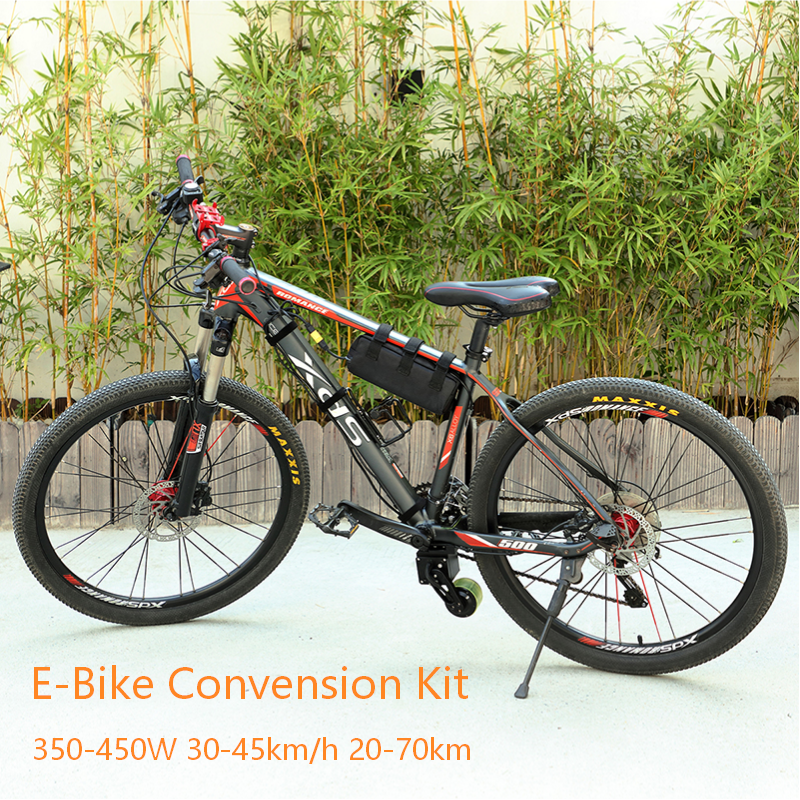
If you spend enough time looking at e-bike conversion kits on Amazon, AliExpress, or eBay, you quickly learn to speak a specific dialect of marketing language. It is a language where words are stacked together not for technical accuracy, but to catch as many search queries as possible.
Take, for example, the listing we are evaluating today: the Electric Bicycle Motor 350W Mid Drive Rear Wheel with 45km/h Speed 70km Distance 13Ah 48V Battery for E-Bike Conversion Kit.
To the uninitiated, this sounds like a comprehensive, high-performance package. To anyone who has spent the last decade tearing down electronics and evaluating battery chemistry, it reads like a mechanical contradiction. You cannot have a motor that is simultaneously a "mid-drive" and a "rear wheel" hub. They are two entirely different propulsion systems occupying different physical locations on a bicycle.
Beyond the geographic confusion of the motor placement, the performance claims—specifically 45 km/h top speed and 70 km of range from a 350W system—warrant strict scrutiny. Today, we are going to break down the math, the hardware, and the reality of what this specific configuration actually delivers when the rubber meets the road.
The Motor Identity Crisis: Hub vs. Mid-Drive
The first order of business is clarifying what you are actually buying. Based on the "rear wheel" designation and the price point these kits typically sell for, this is almost certainly a geared rear hub motor, not a mid-drive.
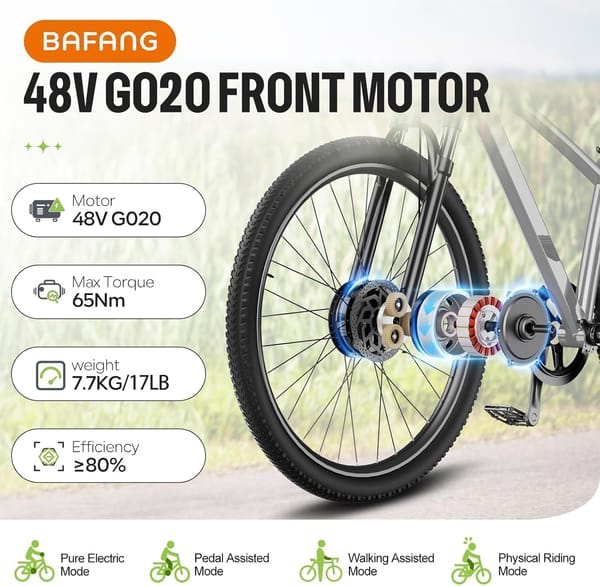
A rear hub motor sits in the center of your back wheel. It applies power directly to the wheel, completely bypassing your bicycle's chain and gears. As noted in a recent discussion among e-bike builders, hub motors are simple, cost-effective, and reduce wear on your drivetrain. They are excellent for flat commutes and paved paths.
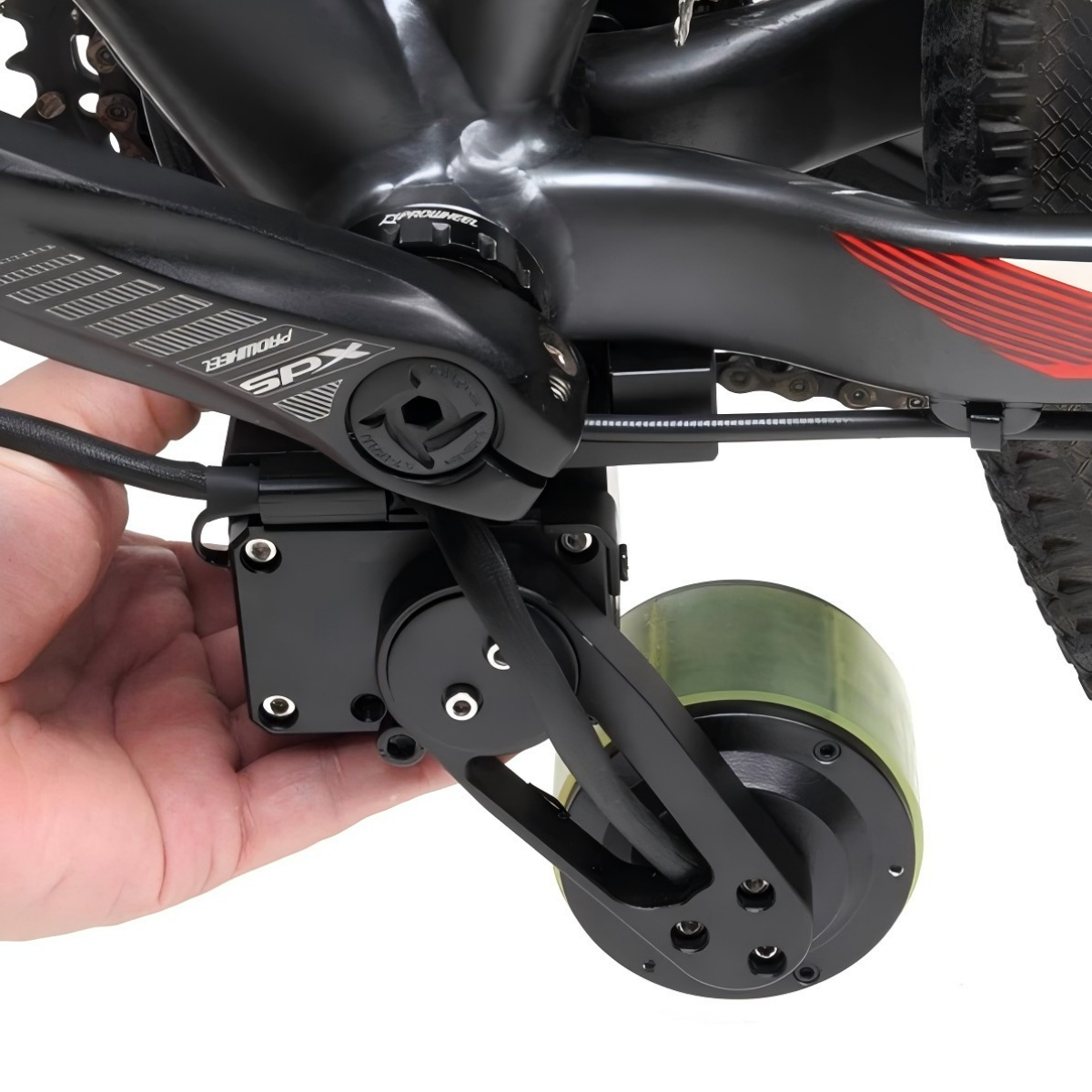
A mid-drive motor, by contrast, replaces your bicycle's bottom bracket and cranks. It drives the chain, allowing the motor to leverage your bicycle's rear cassette. This means the motor can "shift gears" just like you do, making mid-drives vastly superior for climbing steep hills or hauling heavy cargo. They are also significantly more expensive and require more maintenance.
Sellers often cram "mid-drive" into a hub motor listing simply because mid-drives are highly sought after. If you purchase this kit expecting the hill-climbing leverage of a true mid-drive system, you will be disappointed. You are getting a rear hub motor. It will push you from behind, but it will bog down on steep, sustained inclines.
The 350W Power Rating and the 45 km/h Claim
The most egregious claim in this spec sheet is the promise of a 45 km/h (28 mph) top speed from a 350-watt motor.
In the e-bike industry, motor wattage is often reported as a "nominal" figure—the amount of power the motor can sustain continuously without overheating. Peak power, which the motor can only sustain for short bursts, is determined by the controller.
To understand why 45 km/h is unlikely, we have to look at the physics of cycling. Aerodynamic drag increases exponentially with speed. To propel a standard bicycle and an average adult rider to 32 km/h (20 mph) on flat ground with zero wind requires roughly 350 to 400 watts of total power. To reach 45 km/h (28 mph), the power requirement jumps to somewhere between 700 and 850 watts, depending on rider posture and drag coefficient.
A 350W nominal motor might be paired with a controller that peaks at 500W or 600W for a few seconds. If you pedal aggressively, and the controller is pushing its absolute maximum current, you might briefly touch 40 km/h. But a 350W motor will not cruise at 45 km/h.
If a manufacturer actually configures a 350W hub motor to draw enough continuous current to maintain 45 km/h, the internal nylon planetary gears will likely strip, or the copper windings will overheat and melt the hall sensors. Expect a realistic, sustainable top speed of 32 km/h (20 mph) on throttle alone.
Battery Mathematics: 48V, 13Ah, and the 70km Range
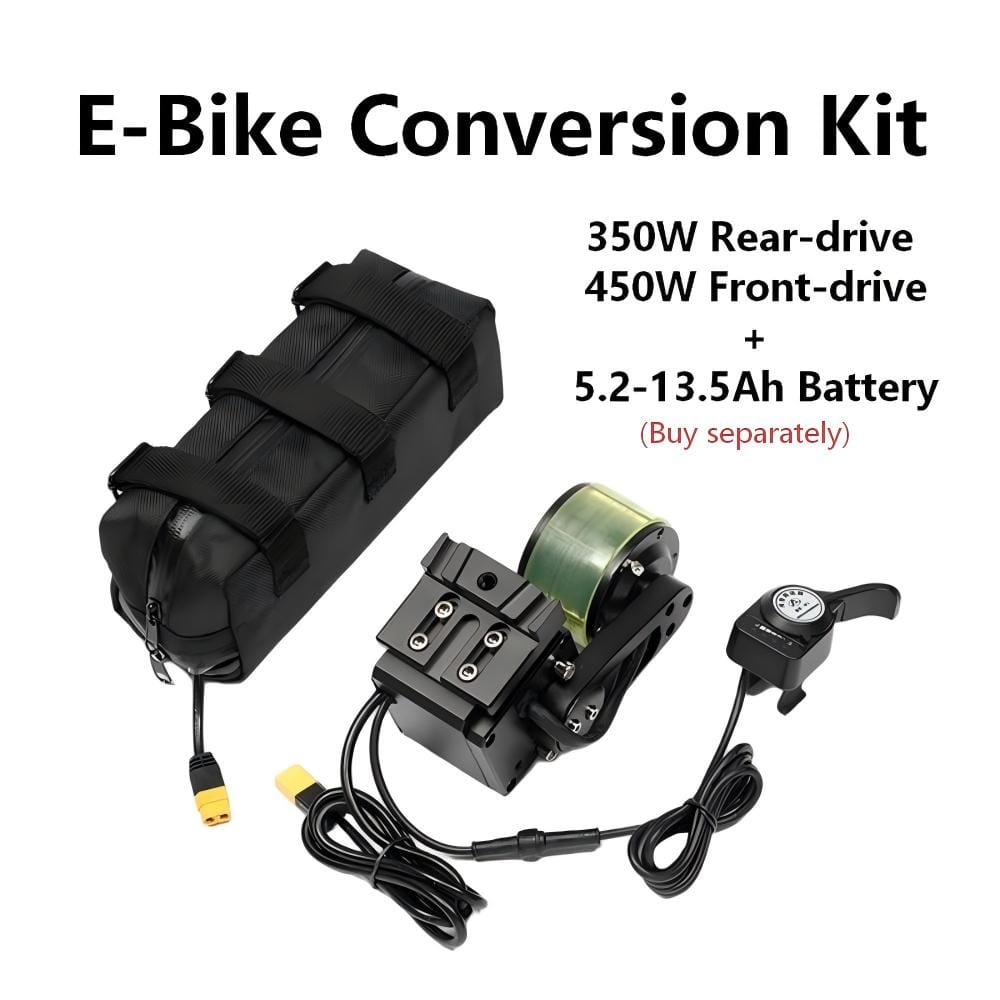
Unlike the speed claim, the battery specifications here are standard and mathematically coherent.
To evaluate an e-bike battery, you multiply the voltage by the amp-hours to find the total energy capacity in watt-hours (Wh).
- 48 Volts × 13 Amp-hours = 624 Watt-hours.
A 624Wh battery is a respectable size for a commuter bike. But does it deliver 70 kilometers (43 miles) of range?
Range is entirely dependent on how much power you ask the motor to deliver. A standard metric for e-bike efficiency is Watt-hours per mile (Wh/mi).
- Throttle-only riding at 32 km/h (20 mph): You will consume roughly 20 to 25 Wh/mi. At 25 Wh/mi, a 624Wh battery yields about 25 miles (40 km) of range.
- Moderate pedal assist at 24 km/h (15 mph): You will consume roughly 12 to 15 Wh/mi. At 14 Wh/mi, the battery yields about 44 miles (70 km).
The 70km distance claim is accurate, but only under specific conditions: flat terrain, moderate speeds, and the rider providing a significant portion of the pedal power. If you attempt to ride at the advertised 45 km/h, your efficiency will plummet to around 35 Wh/mi, and your battery will be dead in under 30 kilometers.
To see how these variables interact in real-time, you can adjust the parameters in the calculator below.
Component Quality and Electronics
When buying unbranded conversion kits, the motor and battery cells are only part of the equation. The electronics governing them determine how the bike feels to ride.
Most kits in this category rely on a cadence sensor rather than a torque sensor. A cadence sensor is a simple ring of magnets installed on your pedal crank. When you turn the pedals, the sensor detects movement and acts as an on/off switch for the motor.
As noted by long-time riders evaluating motor types and sensors, cadence sensors provide a somewhat unnatural, jerky riding experience. You pedal, there is a slight delay, and then the motor kicks in at a pre-set speed. When you stop pedaling, there is a slight delay before the motor cuts off.
Torque sensors, which measure exactly how hard you are pushing on the pedals and amplify your effort proportionally, offer a much smoother ride. However, torque sensors are expensive and almost never included in budget 350W kits.
Furthermore, you need to consider the battery cells. A 48V 13Ah pack is likely constructed using generic 18650 lithium-ion cells. While generic cells have improved over the years, they still suffer from voltage sag under heavy load compared to premium cells from LG, Samsung, or Panasonic. When the battery drops below 50% charge, you will likely notice a significant decrease in acceleration and top speed.
The Reality of Installation
Converting a standard bicycle into an e-bike requires mechanical competence. The listing states it takes "1-2 hours to successfully convert it." This is an optimistic timeframe for a first-time builder.
You will need to remove your bottom bracket to install the cadence sensor, which requires specific puller tools. You will have to route wiring along the frame, dealing with excess cable length and zip-ties.
More importantly, you must install a torque arm. A bicycle's rear dropouts are designed to handle the rotational force of human legs. They are not engineered to withstand the immediate torque of an electric motor twisting the axle. Failing to install a torque arm on a metal frame can result in the motor snapping the dropouts and tearing itself out of the bike, taking the wiring harness with it. Never skip the torque arm, even on a lower-power 350W system.
Additionally, adding a motor and a heavy battery changes the braking dynamics of your bicycle. If your donor bike has basic rim brakes, the added weight and higher average speeds will push them past their safe operating limits. Disc brakes are highly recommended for any e-bike conversion.
Where This Kit Fits in the Market
If we strip away the contradictory marketing terms and inflated performance metrics, what we are left with is a basic 350W 48V rear hub motor kit with a 624Wh battery.
Evaluated accurately, it is a practical hardware set for a specific use case. It is not a high-speed commuter, and it is certainly not a mid-drive hill climber.
It is, however, a reliable way to add motorized assistance to an existing bicycle for flat, suburban commuting or relaxed weekend trail rides. The 48V system provides slightly better efficiency and less heat generation than an older 36V standard. The 13Ah battery holds enough energy to get you through a few days of reasonable commuting without needing a charge.
When purchasing tech in this tier, the rule is simple: ignore the spec sheet extremes. Buy it for what the hardware actually is—a budget-friendly, moderate-assist hub motor—and you will likely be satisfied with the result. Buy it expecting to effortlessly cruise at 45 km/h, and you will find yourself pedaling very hard just to keep the promise alive.