Panthalassa Ocean-3: The Floating AI Data Center, Examined
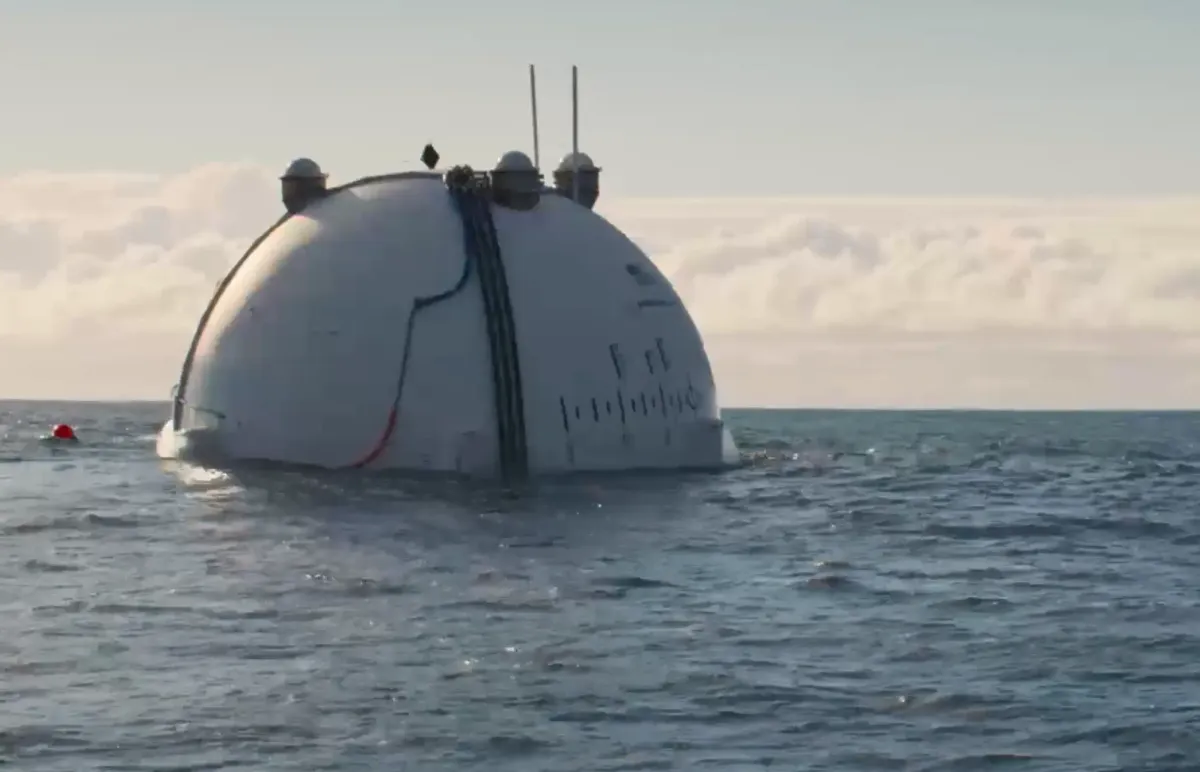
Panthalassa’s Ocean-3 is an 85-meter autonomous floating steel structure designed to generate its own power from wave motion, cool its AI servers with seawater, and communicate with the outside world solely via satellite internet. The company has raised $140 million in Series B funding at a roughly $1 billion valuation, with pilot testing scheduled for the northern Pacific in late 2026 and commercial deployments targeted for 2027.
Before we assess whether this makes sense for anyone’s budget or workload, let’s establish what Ocean-3 actually is and what it is not.
What Ocean-3 Actually Is
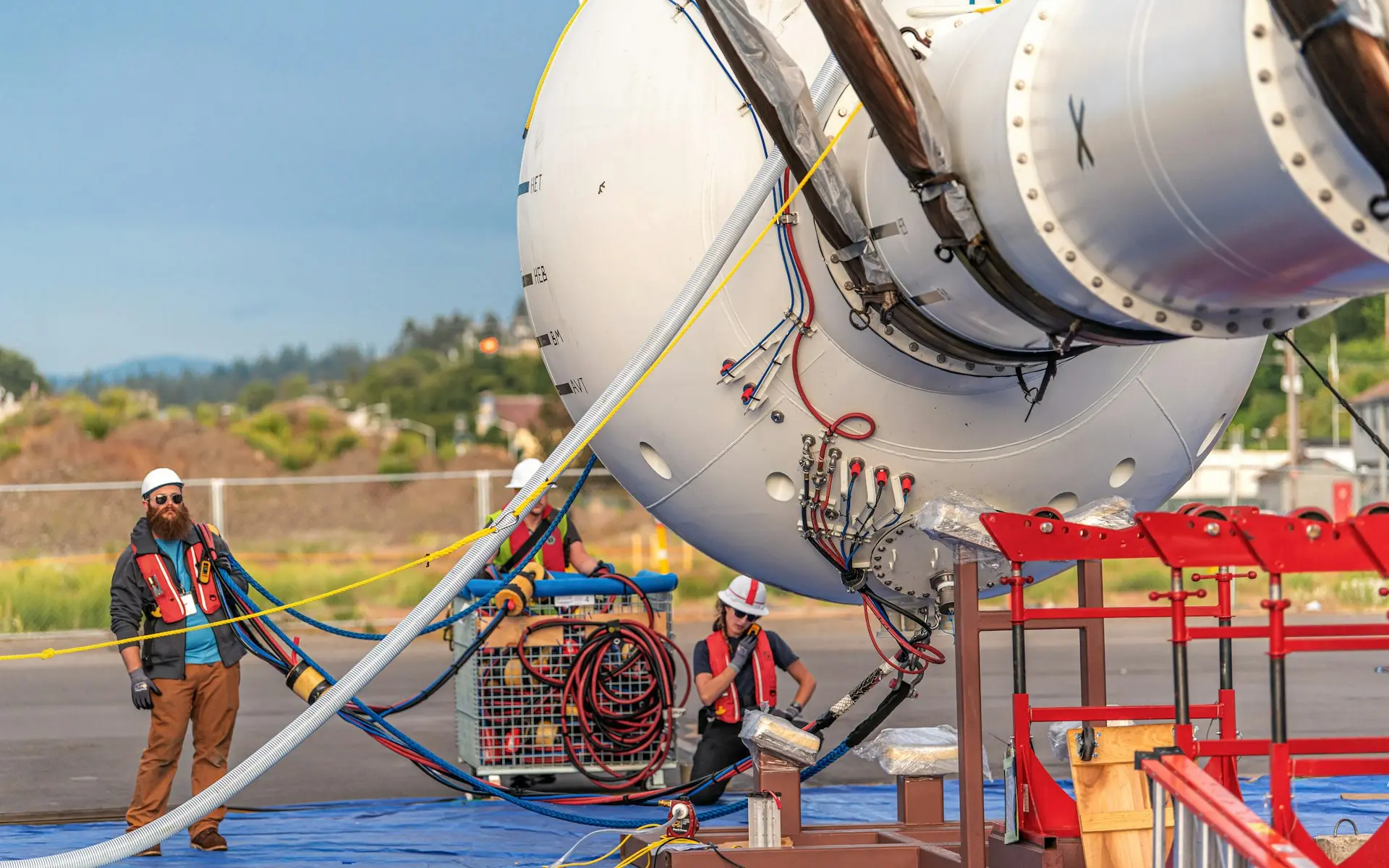
Ocean-3 is a "lollipop"-shaped floating platform: a large spherical buoy on the surface with a vertical steel tube extending 60–70 meters down into the water. Total length is approximately 85 meters—roughly the height of Big Ben or New York’s Flatiron Building.
The platform has no anchors, no mooring cables, and no physical connection to the seabed or shore. It is self-propelled and can move at about 50 kilometers per day to避开 storms or seek more energetic wave regions. It is, in the CEO’s words, "like a giant Roomba" that navigates autonomously.
Power generation works as follows: wave motion forces seawater up through the tube into a pressurized reservoir inside the sphere, which then releases water through a turbine generator. Peak power output is approximately 1 megawatt per node, with a theoretical capacity factor around 90%—significantly higher than solar or wind. The company claims power generation costs could be as low as $0.02 per kWh.
The onboard AI servers are sealed in a hermetic compartment and cooled by the surrounding seawater. The company claims a theoretical PUE (Power Usage Effectiveness) approaching 1.0, versus 1.2–1.5 for typical land-based data centers. Results are transmitted back to land via low-Earth-orbit satellite—specifically, Starlink.
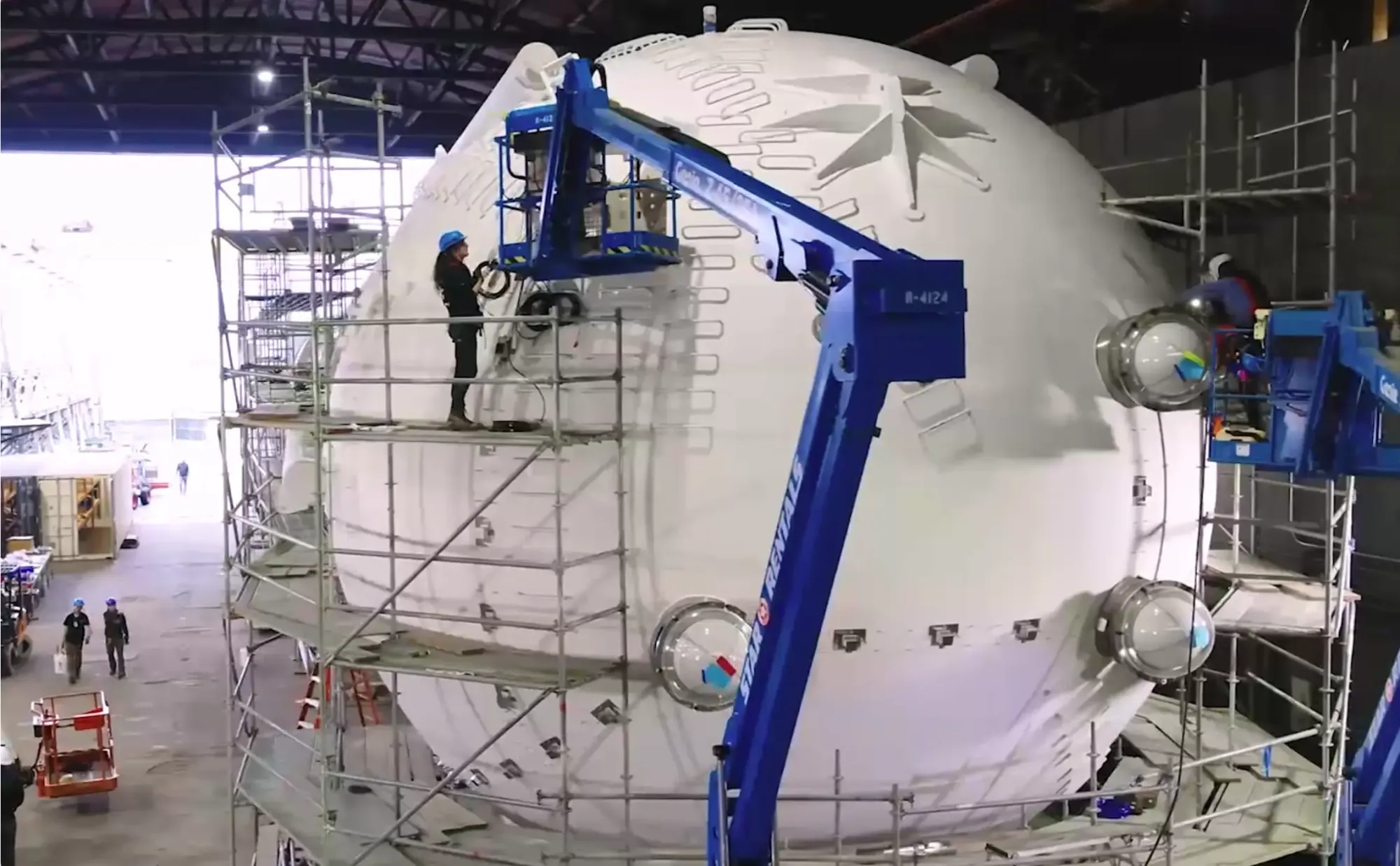
Power: The Core Promise
The central claim is that Ocean-3 bypasses the three main constraints of land-based AI data centers: grid capacity, cooling water availability, and permitting delays.
Wave energy is abundant. The open ocean contains tens of terawatts of untapped potential. And Ocean-3 consumes what it generates on-site—there is no transmission loss, no submarine cable, no grid interconnection.
That is intellectually elegant. Turning an energy transmission problem into a data transmission problem is a genuine insight.
Compared to what? A 1 MW data center is modest. A single Nvidia H100 GPU consumes about 700W; a DGX H100 server (8 GPUs) pulls about 10.2 kW. One megawatt supports roughly 80–100 such servers, depending on overhead. That is a meaningful but not enormous compute cluster. For context, a large land-based AI data center might draw 100+ MW. Panthalassa would need 100 Ocean-3 nodes to match that.
The $0.02/kWh claim is worth scrutinizing. That is cheaper than utility-scale solar ($0.03–0.06/kWh) and onshore wind ($0.02–0.05/kWh). If true, it would be genuinely disruptive. But this is a theoretical figure based on prototype data, not commercial operation. Wave energy converters have historically struggled with maintenance costs and survivability in storms. The levelized cost of energy (LCOE) for wave power has rarely been competitive. Panthalassa may have solved some of these problems, but we do not yet have independent verification.
Courtesy of Panthalassa
Cooling: The Genuine Advantage
This is where Ocean-3 has the strongest case. Land-based data centers consume enormous amounts of electricity and fresh water for cooling. Seawater at depth is cold, abundant, and free.
The theoretical PUE of ~1.0 means almost all generated power goes to compute, not to keeping the chips from melting. That is a real efficiency gain over the 1.2–1.5 PUE typical of well-run land facilities.
However, seawater cooling introduces its own problems: corrosion, biofouling, and the need for heat exchangers that must be maintained. The company claims a hermetically sealed server compartment, which suggests indirect cooling (seawater passes through a heat exchanger, not directly over the boards). That adds complexity but is a proven approach in marine engineering.
The cooling advantage is real but not unique. China has already deployed commercial underwater data centers off Hainan and Shanghai, using seawater cooling. Microsoft’s Project Natick demonstrated that submerged servers had one-eighth the failure rate of land-based equivalents. The physics of ocean cooling are well understood. Panthalassa’s innovation is not cooling—it is combining cooling with wave-powered generation in a mobile, unanchored platform.
Satellite Connectivity: The Binding Constraint
Ocean-3 has no fiber optic cable. All communication with the outside world goes through low-Earth-orbit satellites—specifically Starlink.
This is the single biggest limitation of the architecture.
Satellite internet has improved dramatically. Starlink offers latency of 20–40 ms and throughput of 50–200 Mbps per terminal in many regions. But fiber optic networks offer latency of 5–15 ms and bandwidth measured in gigabits or terabits per second.
For AI inference—responding to a user prompt with a model output—satellite latency may be acceptable. A few extra tens of milliseconds is noticeable but not catastrophic for many applications.
For AI training, it is a non-starter. Training large models requires massive data movement between nodes, tight synchronization, and low-latency, high-bandwidth interconnects. The satellite uplink simply cannot support this at scale.
Panthalassa acknowledges this. Ocean-3 is explicitly positioned for inference, not training. The company is not claiming to replace hyperscale training clusters. It is targeting "price-sensitive, latency-tolerant, batch-processable inference tasks".
That is a narrower market than the headlines suggest. Inference is growing fast—every ChatGPT query is inference—but it is also the part of AI most easily shifted to edge devices or optimized for cost. The addressable market for ocean-based inference is real but bounded.
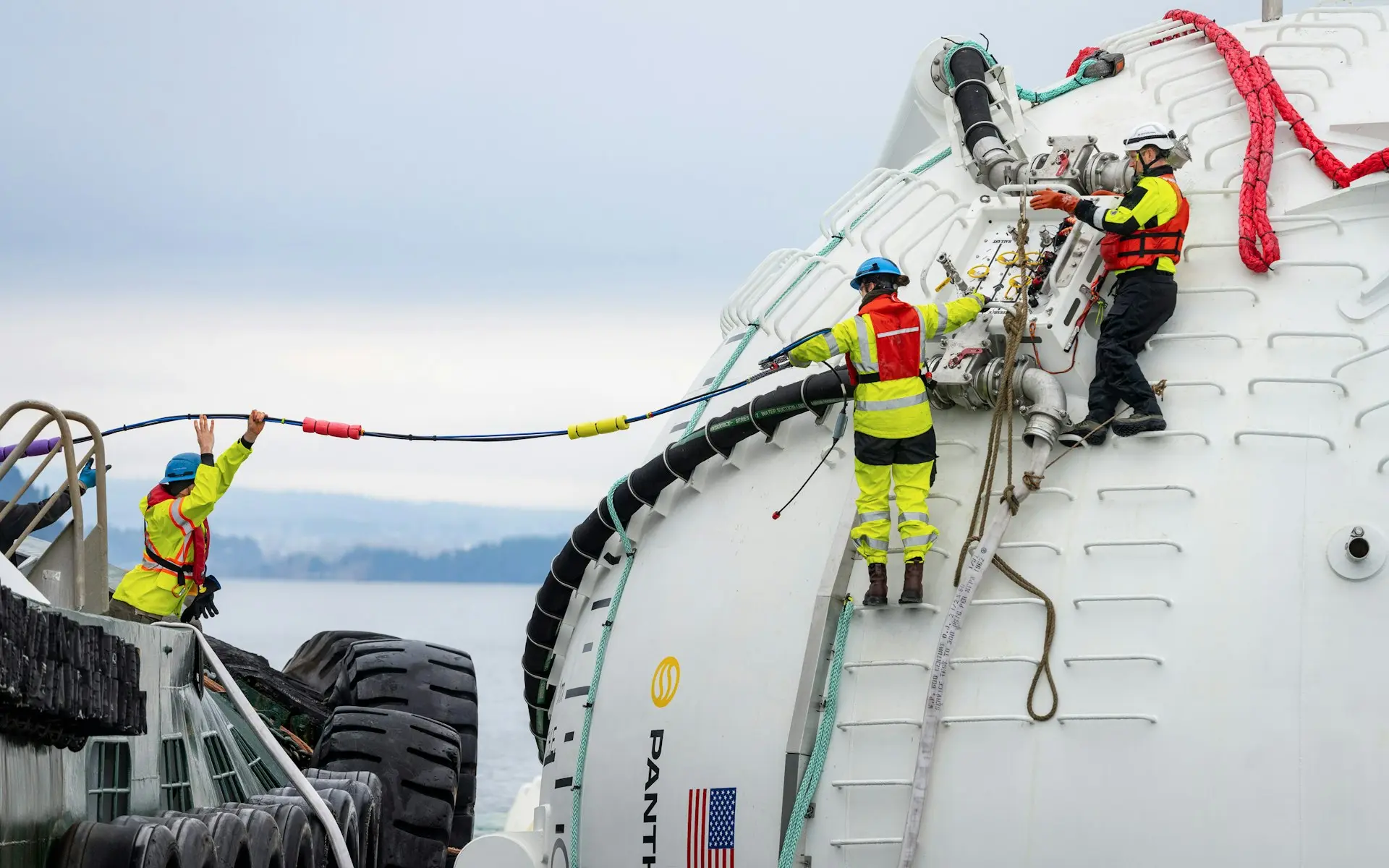
Comparison to Other Underwater/Floating Data Centers
Microsoft’s Project Natick is the obvious reference point. Microsoft sank a data center off Scotland in 2018, operated it for two years, and found that submerged servers had a failure rate one-eighth that of land-based equivalents. The project met all technical targets.
Microsoft shelved it anyway. The reason? Lack of client demand and unviable economics. The technology worked. The business case did not.
Panthalassa is different in two ways: it generates its own power (Natick was grid-connected via cable) and it is floating rather than submerged (easier to access for maintenance, but also more exposed to storms). But the lesson from Natick is worth holding close: technical feasibility does not equal commercial viability.
China has deployed commercial underwater data centers off Hainan and Shanghai, using seawater cooling and offshore wind power. These are stationary, cable-connected facilities, not autonomous floating nodes. They are further along in commercialization but face their own challenges around maintenance, sealing, and environmental impact.
Other startups are entering the space. Aikido has announced a floating wind platform integrated with an AI data center. Samsung and OpenAI are reportedly exploring floating data centers. Ocean-based compute is becoming a crowded field.
Economics: The $1 Billion Question
Panthalassa has raised approximately $210 million total, with the latest round valuing the company at roughly $1 billion. That valuation implies significant expectations.
What does a node cost to build? The company has not disclosed pricing. Steel, fabrication, wave energy converters, AI servers, and satellite terminals do not come cheap. An 85-meter steel structure is a major piece of marine engineering—comparable to a small ship. Construction costs could easily run into the tens of millions per node.
Operating costs are also uncertain. Maintenance at sea requires specialized vessels and crews. Hurricanes, salt spray, and constant motion impose wear on every component. The company claims the platform can move to avoid storms, which helps, but the North Pacific is not a gentle environment.
The $0.02/kWh power cost, if achieved, would be compelling. But that is only part of the total cost of delivered compute. The node must also repay its capital cost, cover maintenance, and generate a return for investors.
Compared to what? A land-based AI data center in a region with cheap power (e.g., the Pacific Northwest at $0.04–0.06/kWh) and good fiber connectivity has lower capital costs, easier maintenance, and vastly better network performance. The trade-off is higher cooling costs and longer permitting timelines.
Ocean-3 makes economic sense only if the savings from avoiding land constraints (grid, cooling water, permits) outweigh the costs of marine operations and satellite bandwidth. That is a narrow window.
Risks and Unknowns
Survivability. The ocean is corrosive, violent, and unforgiving. Ocean-3 must withstand hurricanes, salt spray, and continuous motion. The company has tested Ocean-1 and Ocean-2 prototypes in 2021 and 2024, but three-week trials are not five-year deployments.
Satellite bandwidth and cost. Starlink is not free. Transmitting inference results for millions of queries could incur significant data costs. Bandwidth is also shared; a fleet of nodes in the same region could saturate available capacity.
Environmental impact. A single floating platform may have limited ecological impact. A fleet of thousands, as the CEO envisions, is a different matter. The company has not published environmental impact assessments.
Regulatory and geopolitical. Operating autonomous floating data centers in international waters raises questions about jurisdiction, data sovereignty, and security. Who owns the data? Which country's laws apply? Can a node be physically seized? These are not academic concerns.
Commercial adoption. Who will buy inference capacity from an ocean-based node? The company claims it has backing from "a range of AI companies", but no named customers have been disclosed. Inference is a commodity business; price and latency are the primary differentiators. Ocean-3 needs to win on price despite higher operational costs.
Who Is This For?
For AI inference workloads that are:
- Batch-processable (not real-time)
- Latency-tolerant (can handle an extra 20–40 ms)
- Price-sensitive (willing to trade some performance for lower cost)
- Not requiring massive data movement between nodes
This is not for:
- Training large models
- Real-time applications (gaming, high-frequency trading, autonomous vehicles)
- Workloads requiring high-bandwidth inter-node communication
- Customers with strict data sovereignty or regulatory requirements
Ocean-3 is an "off-grid AI inference power plant," not a hyperscale cloud replacement. That is a defensible niche, but it is not the sweeping transformation the headlines suggest.
Courtesy of DW Planet A
Verdict
Panthalassa Ocean-3 is technically interesting and intellectually coherent. The combination of wave power, seawater cooling, and satellite backhaul in an autonomous floating platform is novel. The company has credible prototypes, serious investors, and a plausible path to pilot deployment.
The cooling advantage is real. The power generation claim is unproven but possible. The satellite constraint is binding and permanent—no amount of engineering will make Starlink as fast or cheap as fiber.
For batch inference workloads that can tolerate latency and do not require massive data movement, Ocean-3 could be competitive. For everything else, it is not a substitute for land-based infrastructure.
The $1 billion valuation reflects hope, not proof. The technology has passed small-scale sea trials. It has not passed commercial scrutiny. Microsoft’s Project Natick succeeded technically and failed commercially. Panthalassa may avoid that fate by targeting a narrower market, but the risks are substantial.
Recommendation: Watch the 2026 North Pacific pilot closely. If the node survives a full year, generates power reliably, and delivers inference results at a competitive price, Ocean-3 becomes worth serious consideration for the right workloads. Until then, treat it as an experiment with excellent branding.
References
- Panthalassa official site: https://panthalassa.com/
- Ars Technica: Silicon Valley bets $200M on AI data centers floating in the ocean
- Data Center Dynamics: Panthalassa unveils wave-powered floating data center platform
- Renewable Energy Magazine: Panthalassa Raises $140 Million to Power AI Using Ocean
- Fox News: AI data centers may soon ride ocean waves
- Xataka: Miden 85 metros, no tienen anclas y están conectados a Starlink
- IT Boltwise: Panthalassa startet Wellenbouy mit KI-Rechenleistung via Starlink
- DataCenter Insider: Ein KI-Rechenzentrum auf hoher See mit 100% Wellenenergie?
- Yahoo Tech: Inside the giant floating ocean balls Silicon Valley is betting $200M on
- Wedbush Investor: Panthalassa Raises $140 Million to Power AI at Sea
- Linkiesta: In alto mare
- ITPro: Microsoft scrapped its 'Project Natick' underwater data center trial